
PLATFORM EVIDENCE
Built for Large-Scale, Multi-Cargo and Group Terminal Operations
Designed for continuous high-volume operations, multiple cargo types and group-level terminal management, with emphasis on scale, coverage, architecture and long-term evolution.
CHALLENGES
As Volume, Cargo Diversity and Automation Grow, Legacy Systems Become a Constraint
The core operating system must handle scale, coordination, decision-making and continuous modernization at the same time.
Scale Constraints
High transaction volumes can expose performance and stability limits in legacy architectures.
Coordination Gaps
Multiple terminals, cargo types and equipment fleets are difficult to coordinate efficiently.
Slow Decision Cycles
Dispatch depends too heavily on manual experience, slowing decisions and increasing operating cost.
Modernization Risk
Complex upgrades, high maintenance cost and weak control over technology evolution increase project risk.
CORE ADVANTAGES
Intelligence · Automation · Integration · Data
Build decision intelligence, equipment coordination, group operations and data capabilities as one platform.
Intelligence · Decision Optimization
Apply rule engines and intelligent optimization to berth, stowage, yard and equipment planning to support production decisions and execution.
Automation · Equipment Coordination
Coordinate automated quay cranes, yard cranes and driverless transport through standardized multi-vendor interfaces and centralized dispatch.
Integration · Group Operations
Support multiple terminals, port areas and cargo types in one platform, with flexible group-cloud or on-prem deployment and shared resources across terminals.
Data · Operational Intelligence
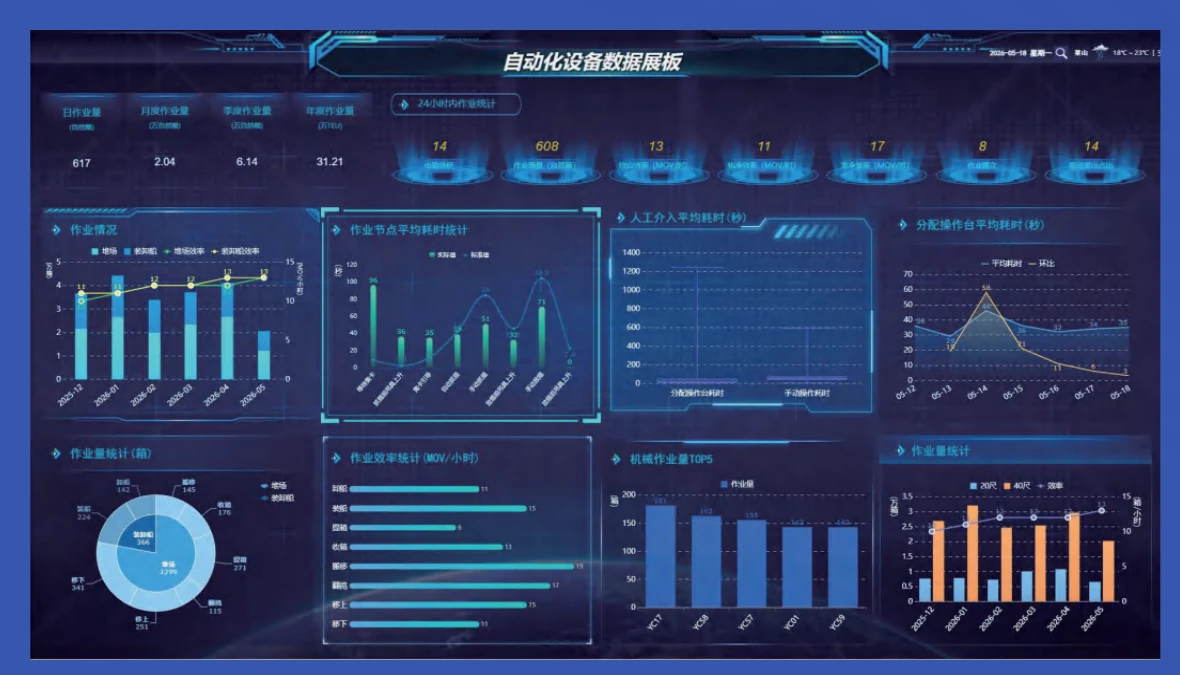
Unify production and commercial data for real-time monitoring, management dashboards, analytics, digital twins and operational simulation.
FULL BUSINESS COVERAGE
A Continuous Operating Chain from Planning to Customer Service
The operating platform covers not only cargo handling, but also customer services, commercial operations and cross-system data collaboration.
Planning & Dispatch
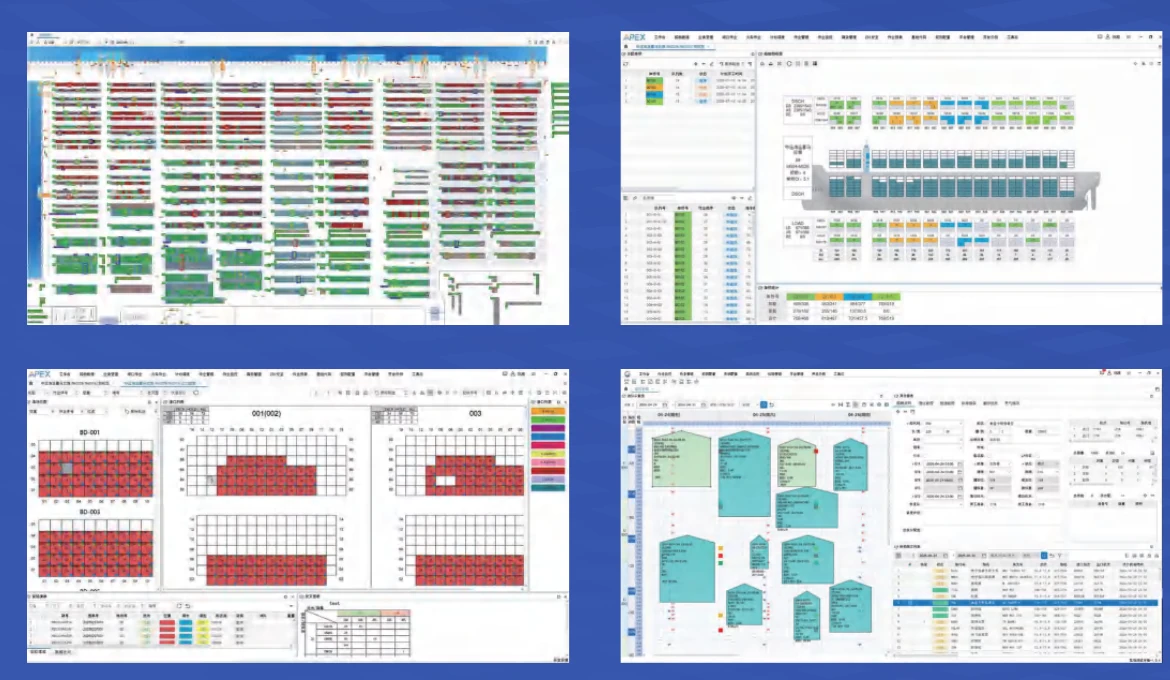
Vessel, berth, yard, rehandle, rail loading and CFS planning with berth optimization, stowage, slot assignment and operation simulation.
Operations Control
Control vessel, rail, breakbulk, receiving/delivery, CFS and equipment tasks with real-time monitoring, exception alerts and closed-loop execution.
Customer Services
Online services, appointments, EIR, amendment workflows, dangerous-goods declarations, logistics tracking, inquiries and customer collaboration.
Billing & Settlement
Tariff management, automated charging, settlement and reconciliation, invoice review, customer credit, receivables and commercial analytics.
Data & Exchange
EDI, external interfaces, analytics, management dashboards, data integration and digital-twin capabilities for continuous operational decision support.
TECHNOLOGY FOUNDATION
Stable · Secure · High-Performance · Scalable
Enterprise architecture designed for high concurrency, hybrid deployment, security controls, localization options and continuous upgrades.
Core Architecture
Microservices + micro-frontends with modular components, distributed caching, large-scale data tables, historical archiving, sharding and clustered deployment.
Deployment & Security
Support cloud, virtualized, containerized and physical deployments, with HTTPS, SaToken, JWT-based access controls, audit trails and visual operations monitoring.
Continuous Evolution
Modular decoupling, feature-based activation, multilingual and multi-terminal support, open interfaces and multi-device connectivity for smooth upgrades and elastic expansion.
| China-Localized Stack | Supported Options |
|---|---|
| Operating Systems | Kylin / UnionTech / Anolis OS / openEuler |
| Databases | Dameng / OceanBase / GaussDB / OpenGauss |
| Middleware | TongTech / BES / Kingdee Apusic / RocketMQ / Tendis |
VALUE & SCENARIOS
One Core Platform for Different Roles and Terminal Types
Suitable for container, dry bulk, breakbulk, liquid bulk, Ro-Ro and mixed-cargo terminals.
For Executives
Gain a unified view of terminal and group operations for better visibility, risk control, data-driven decisions and cost management.
For Operations
Coordinate vessels, trucks, containers, cargo, equipment and people across one operating chain to improve visibility and control.
For Customer Service
Digitize appointments, transactions, inquiries and settlement to improve customer transparency and response speed.
Container TerminalsDry Bulk TerminalsBreakbulk TerminalsLiquid Bulk TerminalsRo-Ro TerminalsMixed-Cargo Terminals
Build the Core System Around Real Terminal Operations
Review current processes, system architecture, automation equipment and interfaces to define the right TOS scope and implementation path.